
Pharmaceutical Technology
Advancing healthcare through innovative pharmaceutical research, drug development, and manufacturing technologies
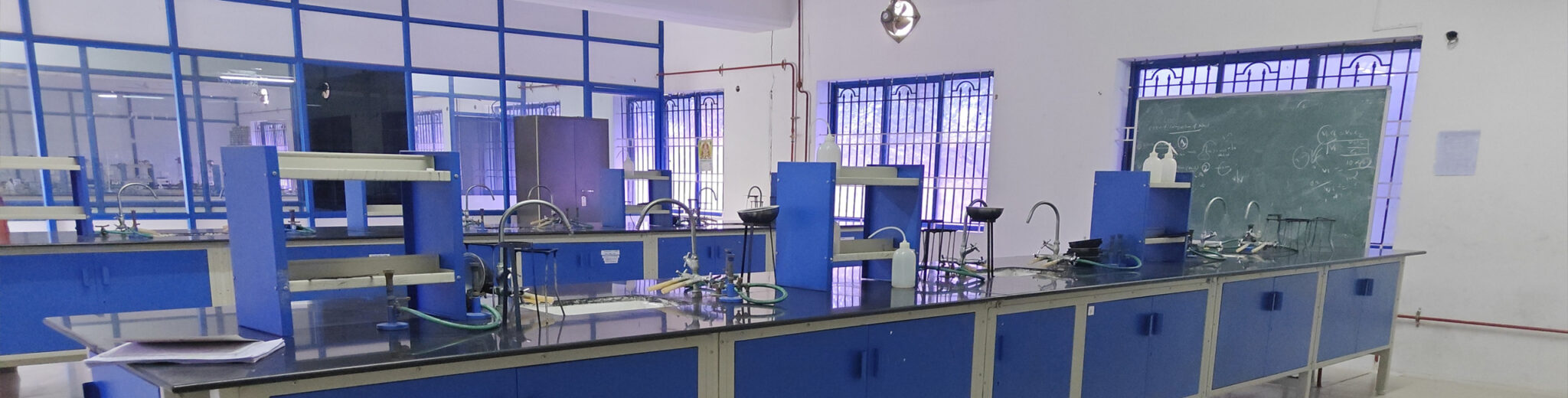
Department of Pharmaceutical Technology
The Department of Pharmaceutical Technology at SVHEC bridges the gap between pharmacy and engineering, focusing on drug development, pharmaceutical manufacturing, quality control, and regulatory affairs. Our program prepares students for careers in pharmaceutical industries, research organizations, and regulatory agencies.
About the Department
The Department of Pharmaceutical Technology was established in 2016 to meet the growing demand for pharmaceutical engineers in the drug industry. Our program uniquely combines engineering principles with pharmaceutical sciences, covering drug formulation, manufacturing processes, quality assurance, regulatory compliance, and biotechnology applications in pharmaceuticals. The Pharmaceutical Technology Department has well-established laboratories with modern equipment, pilot plant facilities, and software tools to provide practical exposure to students. The continuously evolving pharmaceutical landscape poses challenges to students to stay updated with the latest developments in drug manufacturing, quality control, and regulatory affairs. Our qualified faculty and well-equipped labs ensure that our students are well prepared to take on these challenges. All graduates of Pharmaceutical Technology find excellent placements in pharmaceutical industries, biotech companies, research organizations, and regulatory agencies.
Vision
To be a leading department in pharmaceutical technology education, producing innovative professionals who can drive advancements in drug development, manufacturing, and healthcare delivery through engineering excellence and research.
Mission
- Provide quality education in pharmaceutical technology with state-of-the-art laboratories, pilot plant facilities, and modern teaching-learning systems.
- Produce skilled pharmaceutical engineers with technical expertise, leadership qualities, communication skills, social responsibilities, and ethical values.
- Inculcate professional skills to function as proficient pharmaceutical engineers capable of developing safe, effective, and quality pharmaceutical products and processes.
- Promote research and development activities in pharmaceutical technology, drug delivery systems, and pharmaceutical manufacturing processes.
Basic Skills
PEO 1: To apply fundamental knowledge of pharmaceutical sciences, engineering principles, and technology to analyze, design, and develop pharmaceutical products and processes.
Technical Skills
PEO 2: To enable graduates to pursue higher education and research, or have a successful career in pharmaceutical industries, biotech companies, research organizations, or as entrepreneurs.
Managerial Skills
PEO 3: To ensure that graduates will have the ability and attitude to adapt to emerging technological changes in pharmaceutical manufacturing, drug delivery systems, and regulatory requirements.
Engineering knowledge
PO 1: Apply the knowledge of mathematics, science, engineering fundamentals, and an engineering specialization to the solution of complex engineering problems.
Problem analysis
PO 2: Identify, formulate, review research literature, and analyze complex engineering problems reaching substantiated conclusions using first principles of mathematics, natural sciences, and engineering sciences.
Design/development of solutions
PO 3: Design solutions for complex engineering problems and design system components or processes that meet specified needs with consideration for public health, safety, and cultural, societal, and environmental factors.
Conduct investigations of complex problems
PO 4: Use research-based knowledge and methods including experiments, analysis, interpretation of data, and synthesis of information to provide valid conclusions.
Modern tool usage
PO 5: Create, select, and apply appropriate techniques, resources, and modern engineering and IT tools including prediction and modeling to complex engineering activities with an understanding of the limitations.
The engineer and society
PO 6: Apply reasoning informed by contextual knowledge to assess societal, health, safety, legal, and cultural issues relevant to professional engineering practice.
Environment and sustainability
PO 7: Understand the impact of professional engineering solutions in societal and environmental contexts, and demonstrate knowledge of sustainable development.
Ethics
PO 8: Apply ethical principles and commit to professional ethics and responsibilities and norms of engineering practice.
Individual and team work
PO 9: Function effectively as an individual, and as a member or leader in diverse teams, and in multidisciplinary settings.
Communication
PO 10: Communicate effectively on complex engineering activities with the engineering community and society, such as writing reports, designing documentation, making presentations, and giving and receiving clear instructions.
Project management and finance
PO 11: Demonstrate knowledge and understanding of engineering and management principles and apply them to one's own work, as a team member or leader, to manage projects in multidisciplinary environments.
Life-long learning
PO 12: Recognize the need for and have the preparation and ability to engage in independent and life-long learning in the broad context of technological change.
Pharmaceutical Product Development
PSO 1: Excel in analyzing, designing, and developing pharmaceutical products and processes by applying foundational concepts of pharmaceutical technology and engineering principles.
Quality Assurance & Regulatory Affairs
PSO 2: Apply quality assurance principles, Good Manufacturing Practices (GMP), and regulatory compliance standards for developing safe, effective, and quality pharmaceutical products.
Emerging Pharmaceutical Technologies
PSO 3: Exhibit emerging technologies in pharmaceutical manufacturing, drug delivery systems, and biopharmaceutics to innovate ideas and solutions to existing or novel challenges in the pharmaceutical industry.
4 Years
Program Duration
60
Annual Intake
85%+
Placement Rate
AICTE
Approved
Academic Curriculum
Our curriculum is designed to provide comprehensive knowledge in mechanical engineering fundamentals, advanced manufacturing, and modern industrial practices.
- Engineering Mathematics - I & II
- Engineering Physics
- Engineering Chemistry
- Engineering mechanics
- Engineering Graphics
- Basic mechanical Engineering
- English Communication
- Environmental Studies
- Organic Chemistry
- Physical Chemistry
- Pharmaceutical Analysis
- Microbiology
- Biochemistry
- Human Anatomy and Physiology
- Pharmaceutical Mathematics
- Engineering Mathematics - III
- Pharmaceutical Unit Operations
- Drug Delivery Systems
- Pharmaceutical Quality Control
- Pharmacology and Toxicology
- Process Equipment Design Pharmaceutical Biotechnology
- Regulatory Affairs
- Industrial Pharmacy
- Good Manufacturing Practices
- Pharmaceutical Project Management
- Novel Drug Delivery Systems
- Pharmaceutical Economics
- Biopharmaceutics and Pharmacokinetics
- Major Project
- Industrial Training
- Professional Electives
Our Faculty Team
Our department features faculty members with expertise in pharmaceutical sciences, chemical engineering, and pharmaceutical technology.
Professor
Qualification: ME, PhD
Assistant Professor
Qualification: B.Tech, MS (Research)
Assistant Professor
Qualification: M.Pharm
- Best Teacher Awards from IPA and other professional bodies
- Research grants from DBT, DST, and pharmaceutical companies
- Industry consultancy projects with major pharma companies
- Patents in drug delivery and pharmaceutical formulations
Department Facilities
Pilot-scale manufacturing equipment for tablets, capsules, and liquid formulations with GMP-compliant environment.
Advanced analytical instruments including HPLC, GC-MS, UV-Vis spectrophotometer for pharmaceutical analysis.
Specialized equipment for developing novel drug delivery systems, nanoparticles, and controlled release formulations.
Facilities for fermentation, protein purification, and biopharmaceutical production with cell culture capabilities.
Sterile environment for microbiological testing, sterility testing, and antimicrobial research.
High-performance computers with molecular modeling software for drug design and pharmaceutical informatics.
- Tablet Compression Machine
- Capsule Filling Machine
- Fluid Bed Dryer
- Dissolution Apparatus
- Stability Chambers
- HPLC System
- GC-MS
- FTIR Spectrophotometer
- Particle Size Analyzer
- Fermenters
Research activities
Our department is committed to cutting-edge research in diverse areas of Pharmaceutical, fostering innovation, and collaborating with industry and academic partners to solve real-world challenges.
Nanoparticles, liposomes, microspheres, and targeted drug delivery systems
Method development, validation, and quality control of pharmaceutical products
Biopharmaceuticals, protein drugs, vaccine development, and fermentation technology
Drug synthesis, medicinal chemistry, and pharmaceutical process development
- Nano-drug Delivery for Cancer Treatment: DBT funded - ₹18 Lakhs
- Herbal Drug Standardization and Quality Control: AICTE funded - ₹14 Lakhs
- Sustained Release Formulations for Diabetes: Industry collaboration - ₹12 Lakhs
- Bioequivalence Studies of Generic Drugs: ICMR funded - ₹16 Lakhs
- "Nanoparticle-based Drug Delivery for Targeted Cancer Therapy" - International Journal of Pharmaceutics
- "Quality Control Methods for Herbal Pharmaceuticals" - Journal of Pharmaceutical Analysis
- "Development of Sustained Release Matrix Tablets" - Drug Development and Industrial Pharmacy
- "Bioavailability Enhancement of Poorly Soluble Drugs" - European Journal of Pharmaceutical Sciences
- Final year projects in collaboration with pharmaceutical companies
- Summer research internships in drug development
- Participation in national pharmaceutical conferences
- Patent filing support for innovative formulations
- Process Development Engineer
- Quality Control Analyst
- Quality Assurance Executive
- Production Engineer
- Research Associate
- Regulatory Affairs Executive
- Product Development Executive
- Technical Sales Representative
- Validation Engineer
- Drug Safety Associate
- Industry-specific technical training and workshops
- GMP and regulatory affairs training sessions
- Pharmaceutical industry visits and interactions
- Interview preparation with industry professionals
- Resume building with emphasis on pharmaceutical projects
- Communication skills for pharmaceutical industry requirements
Department activities
Student Clubs and Societies
Student society focusing on pharmaceutical research, drug development projects, and industry awareness programs.
Club dedicated to pharmaceutical analysis, quality testing methods, and analytical instrument training.
Research group focusing on pharmaceutical biotechnology, fermentation processes, and biopharmaceuticals.
Forum for discussing latest developments in drug discovery, medicinal chemistry, and therapeutic innovations.
- PHARMATECH: Annual pharmaceutical technology symposium and exhibition
- FormulateX: Drug formulation development competition
- QualityQuest: Pharmaceutical quality control and analysis competition
- BioPharm: Biotechnology and biopharmaceutical project showcase
- RegulateRight: Regulatory affairs and compliance workshop
- Industry-specific technical training and workshops
- GMP and regulatory affairs training sessions
- Pharmaceutical industry visits and interactions
- Interview preparation with industry professionals
- Resume building with emphasis on pharmaceutical projects
- Communication skills for pharmaceutical industry requirements
- Good Manufacturing Practices (GMP) training programs
- Pharmaceutical validation and qualification workshops
- Regulatory affairs and drug approval process training
- Pharmaceutical analysis and method development workshops
- Drug safety and pharmacovigilance training
- Professional communication for pharmaceutical industry
Ready to Join Pharmaceutical Technology?
Advance healthcare through innovative pharmaceutical solutions. Contact our department for more information about the program and admission process.